7 clinics across Greater Boston

Return-to-Sport Testing

Ready to return to your sport after an injury or surgery? Return-to-sport testing helps evaluate whether your strength, movement, balance, power, and physical capacity are ready for the demands of competition.

What Is Return-to-Sport Testing?

At Boston PT & Wellness, our physical therapists work with youth, high school, collegiate, elite, professional, and recreational athletes throughout the rehabilitation process. Our goal is to help athletes progress from injury rehabilitation to sport-specific performance through objective testing, individualized training, and a gradual return to competition.

Return-to-sport testing is a series of physical assessments used to evaluate an athlete’s readiness to resume sports following an injury or surgery.

Returning to sport involves more than simply being pain-free. Athletes need to be able to tolerate the strength, speed, power, balance, coordination, and movement demands of their sport.

Depending on your injury and sport, testing may evaluate:

Strength
Muscular endurance
Power
Balance
Stability
Neuromuscular control
Agility
Speed
Change of direction
Jumping and landing mechanics
Functional movement
Sport-specific abilities

The results can help identify areas that may still need to be addressed before progressing to full participation.

Who Can Benefit From Return-to-Sport Testing?

Return-to-sport testing can be helpful for athletes recovering from:

ACL, PCL, MCL, or LCL injuries
Meniscus injuries
Shoulder and rotator cuff injuries Ankle injuries Hip injuries
Muscle strains
Tendon injuries
Post-fracture injuries
Tennis elbow
Overhead sports injuries
Running injuries
Cycling injuries
Other orthopedic sports injuries

Testing may also be appropriate following orthopedic surgery, including procedures involving the knee, shoulder, ankle, hip, or spine. Learn more about post-surgical rehabilitation.

Why Is Return-to-Sport Testing Important?

Feeling better does not always mean an athlete is physically ready for competition.

An athlete may have little or no pain but still have deficits in strength, power, balance, endurance, or movement control.

Return-to-sport testing provides objective information that can help your physical therapist determine:

Whether rehabilitation goals have been met
Whether strength has returned sufficiently
Whether there are meaningful differences between limbs
Whether the athlete can tolerate higher-level movement
Whether additional rehabilitation is appropriate
Which areas should be addressed before returning to competition

Testing is one component of the return-to-sport decision and should be considered alongside the athlete’s symptoms, injury history, medical status, sport demands, and overall rehabilitation progress.

Our Return-to-Sport Rehabilitation Process

Comprehensive Evaluation

Your rehabilitation begins with an assessment of your injury, current physical abilities, training history, and goals.

Your physical therapist will consider the specific demands of your sport and position when developing your rehabilitation plan.

Restore Mobility and Movement

Early rehabilitation may focus on restoring appropriate range of motion, reducing movement limitations, and establishing quality movement patterns.

Rebuild Strength and Stability

Progressive strengthening helps restore the muscular capacity needed to tolerate the demands of your sport.

Training may include:

  • Core strengthening
  • Lower- or upper-extremity strengthening
  • Single-leg training
  • Balance and proprioception
  • Neuromuscular training
  • Progressive resistance exercise

Develop Speed, Power & Endurance

As you progress, rehabilitation becomes increasingly demanding.

Depending on your sport, training may include:

  • Sprinting
  • Jumping
  • Landing
  • Agility
  • Change of direction
  • Explosive power
  • Repeated high-intensity efforts
  • Sport-specific conditioning

Sport-Specific Retraining

Every sport places different demands on the body.

Your rehabilitation may incorporate movements specific to your sport, such as:

  • Cutting and pivoting
  • Throwing
  • Swimming
  • Jumping
  • Sprinting
  • Kicking
  • Shuffling
  • Backpedaling
  • Running

The goal is to progressively bridge the gap between rehabilitation exercises and the demands of competition.

Return-to-Sport Testing

Once you’ve progressed through rehabilitation, your physical therapist can perform appropriate testing to evaluate your strength, power, balance, movement quality, and sport-specific physical capacity.

The results can help guide the next stage of your return-to-sport progression.

Testing for Your Injury and Sport

Return-to-Sport Testing After ACL Reconstruction

ACL rehabilitation often requires extensive strength, neuromuscular, and sport-specific training before an athlete returns to competition.

Depending on your rehabilitation plan, testing may evaluate:

  • Quadriceps and hamstring strength
  • Single-leg strength
  • Jumping and landing
  • Hop performance
  • Balance
  • Movement control
  • Agility
  • Power
  • Change of direction
  • Sport-specific demands

Testing results can help identify areas that may require additional training before progressing toward full sports participation.

Return-to-Sport Testing for Upper-Extremity Injuries

Athletes recovering from shoulder, elbow, wrist, or other upper-extremity injuries may also benefit from sport-specific testing.

Depending on the athlete and sport, assessment may include:

  • Strength
  • Range of motion
  • Shoulder stability
  • Neuromuscular control
  • Power
  • Endurance
  • Throwing or overhead demands
  • Sport-specific movement

This can be particularly important for athletes participating in throwing, swimming, racquet sports, and other activities requiring repetitive upper-extremity movement.

Return-to-Sport Testing for Youth Athletes

Young athletes have unique physical and developmental considerations when returning to sports after an injury.

Our physical therapists can take into account:

  • Age
  • Sport
  • Position
  • Training demands
  • Injury history
  • Current physical development
  • Strength and movement quality

The goal is to help young athletes gradually rebuild their physical capacity while preparing them for the demands of their sport.

Strength testing in the clinic.

Return-to-sport testing uses objective measures of strength, power, balance, and movement to guide your next steps.
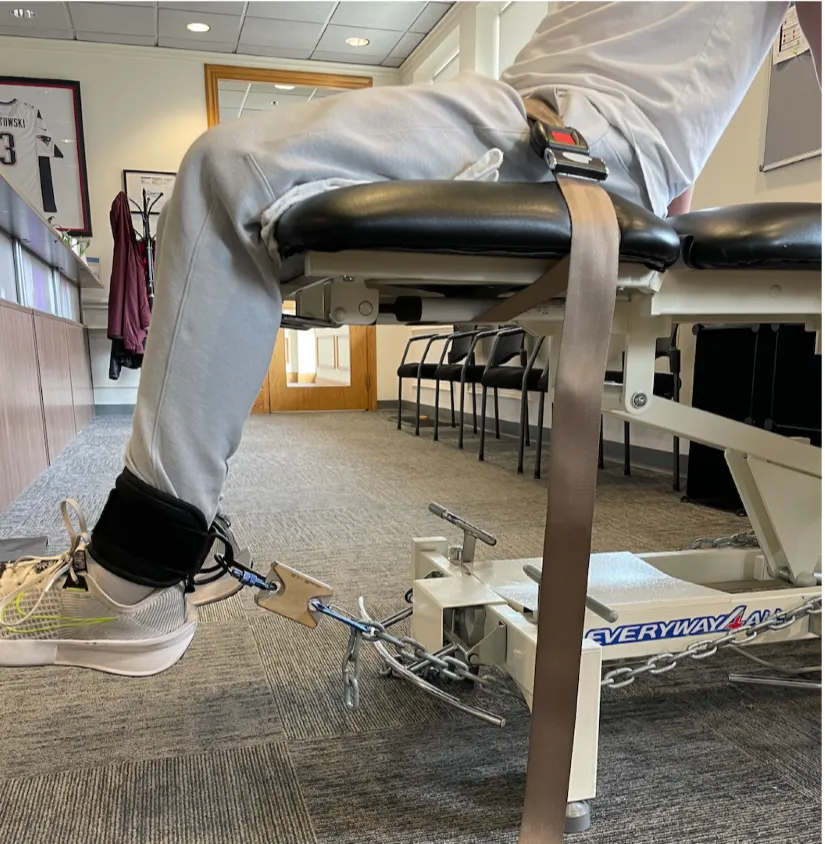
Knee strength testing setup in the clinic

What Happens After Return-to-Sport Testing?

Testing does not necessarily mean an athlete immediately returns to full competition.

Based on the results, your physical therapist may recommend:

Progressing to the next stage of rehabilitation
Continuing strength training
Additional sport-specific training
Addressing specific strength deficits
Continuing conditioning
Gradually increasing practice participation
Retesting after additional rehabilitation

Return to sport is a progression, not a single test or appointment. Your physical therapist can work with you, your coaches, athletic trainers, physicians, and surgeons when appropriate to help coordinate your return.

Frequently Asked Questions About Return-to-Sport Testing

01 / What is return-to-sport testing?
Return-to-sport testing is a series of physical assessments used to evaluate an athlete’s strength, power, balance, movement control, endurance, and sport-specific physical capacity following an injury or surgery.
02 / When should an athlete have return-to-sport testing?
Testing is generally performed after an athlete has progressed through the appropriate stages of rehabilitation and is physically prepared for higher-level activity. The timing depends on the injury, surgery, sport, and individual recovery.
03 / Does passing a return-to-sport test mean I can immediately play?
Not necessarily. Return-to-sport testing is one part of the overall decision-making process. Symptoms, medical clearance, rehabilitation progress, sport demands, psychological readiness, and other factors should also be considered.
04 / What does return-to-sport testing measure?
Testing may measure strength, power, balance, stability, endurance, agility, speed, jumping and landing mechanics, movement quality, and sport-specific abilities depending on the athlete’s injury and sport.
05 / Is return-to-sport testing only for professional athletes?
No. Return-to-sport testing can benefit athletes at many levels, including youth, high school, collegiate, elite, professional, and recreational athletes.
06 / Can I have return-to-sport testing after surgery?
Yes. Athletes recovering from orthopedic surgery may benefit from objective testing as part of their rehabilitation and progression back to sports.

Return to Your Sport With Boston PT & Wellness

Your rehabilitation shouldn’t stop when your pain improves.

At Boston PT & Wellness, we help athletes progress from injury rehabilitation toward the physical demands of their sport through individualized strengthening, movement retraining, sport-specific rehabilitation, and return-to-sport testing.

Whether you’re recovering from ACL surgery, a shoulder injury, ankle injury, muscle strain, or another sports-related condition, we’ll help you build the strength, confidence, and physical capacity needed for your next step.

Contact Boston Physical Therapy & Wellness to learn more about return-to-sport testing and sports rehabilitation.

Prefer to call? (781) 874-9294

Ready to book now? Schedule online